
Newsletter for Generation 2 Generation

May 2026 | Iyar – Sivan 5786
We deeply appreciate your support. Please share this newsletter with those who believe in our mission of Holocaust education and remembrance. Your efforts help us ensure that the lessons of history are never forgotten. Thank you.
Has this newsletter been forwarded to you? You can sign up by clicking here.
Editorial
Yom HaShoah, Israel’s and the Jewish community’s day of remembrance for the victims of the Holocaust, took place recently, on 14 April. The day not only commemorates those who were murdered, but those who resisted the Nazis and their collaborators – both Jews and other peoples. Albeit that they were the exception, some honourable and brave non-Jews stood out against the mainstream of hate and nonchalance. They hid, protected and in multiple ways saved the lives of endangered Jews in occupied Europe.
Since May 1962, the ‘Righteous Among the Nations’ award has been given by Yad Vashem, the World Holocaust Remembrance Centre, to those non-Jewish individuals who are recognised as having put themselves at risk and saved one, many or even hundreds of Jewish lives. They need to be remembered for what they did and for the message they send today about how we need to notice and stand up against oppression and persecution. Dr Joel Zisenwine gives an overview of the Yad Vashem programme, and Anita Peleg tells the remarkable story of one small Italian town where the community, working as one, saved hundreds of Jewish lives.
Vivienne Cato
In This Month – In 1933
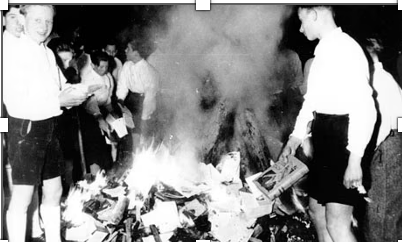
On 10 May 1933, university students in Berlin publicly burned books by Jewish authors, or those considered ‘un-German’. This was followed by similar public book burnings in other German cities.
G2G Upcoming Events
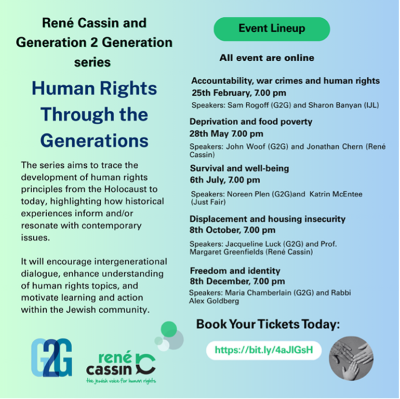
A joint G2G & Rene Cassin programme of events:
28 May, 6 July, 8 October, 8 December (all online)
Human Rights Through the Generations
This wide-ranging series aims to trace the development of human rights principles from the Holocaust to today. Click here to book
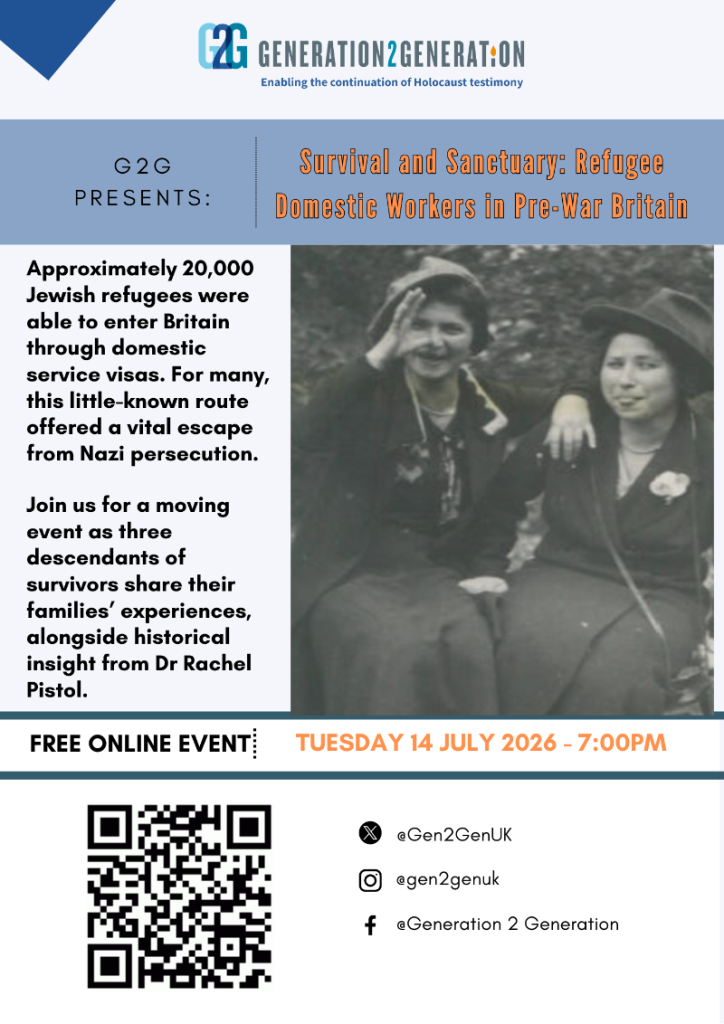
Tuesday 14 July 2026 7.00PM
Survival and Sanctuary: Refugee Domestic Workers in Pre-War Britain
Three G2G speakers will share their mothers’ and family friends’ experiences of coming to Britain from Germany and Austria before the Second World War to be a domestic servant. Dr Rachel Pistol will provide some historical background. Click here to book
Features
Yad Vashem and The Righteous Among the Nations
Dr Joel Zisenwine
The history of the Holocaust is often measured in millions: the six million victims and the many millions more who, through action or silence, were complicit in their suffering. But hidden in those numbers are the relative few who refused to comply with the hatred, fear and indifference of the time. These were people, non-Jews, who risked everything to save the lives of Jews – perhaps by orchestrating a daring escape from a ghetto or maybe it was making a split-second decision to hide someone facing imminent deportation to a death camp.
Stories of such heroism emerged in the immediate wake of the Holocaust through the testimonies of survivors or eyewitness accounts, and when Israel passed a law in 1953 establishing Yad Vashem as the national Holocaust Remembrance Centre, it included in its mission the recognition of ‘the righteous among the nations who risked their lives to rescue Jews’.
In the decades since, nearly 29,000 non-Jews have been honoured by Yad Vashem as Righteous Among the Nations. The ongoing work of collecting and researching these personal and inspiring stories has become a favourite topic for media features. It is an uplifting lens through which to view the darkest chapter in modern history. That is precisely why it is essential to always remember that while these stories are truly remarkable, they were overwhelmingly the exception. At the same, it also should be noted that the number of Righteous recognised does not reflect the full extent of help given by non-Jews during the Holocaust, rather, these cases are based on the material and documentation that was made available to Yad Vashem.
There are clear criteria for granting the title of Righteous Among the Nations. It requires active involvement in the saving of one or more Jews from the threat of death or deportation, and this must have been done under risk to the rescuer’s life, liberty or position. The motivation to act cannot have been to receive compensation or any other reward. Finally, there must be some sort of existing testimony or documentation establishing the nature of rescue. When a file is sufficiently researched it is brought to a public committee, headed by a retired Supreme Court justice, which is authorised to grant the title. The stories honoured over the years range dramatically in scope and profile.
Vasiuta Wegrzynowska was a widow who lived in a village of western Ukraine. During the war – as the Nazis were carrying out their systematic persecution and murder of Jews across Europe – she saved a Jewish family of three, the Helpers, who had once been her employers. She hid them for 18 months in her home and yard and a dark, damp and narrow bunker beneath a cowshed under constant threat of being turned in by neighbours. The Helpers survived. After liberation in late March 1944, Vasiuta and her children Jan, Mikhal and Docia, were murdered by a nationalist gang seeking revenge against people who saved Jews. Yad Vashem recognised Vasiuta Wegrzynowska and her children as Righteous in 1981.
A Swiss border police commander, Paul Grüninger, disregarded official orders and let Jewish refugees into the relative safety of Switzerland. He went even further, falsifying their registration and impeding efforts to trace refugees who were known to have entered the country illegally. When the Germans informed Swiss authorities of Grüninger’s actions, he was dismissed and brought to trial for having helped 3,600 Jews. He was found guilty of breach of duty and lived for the rest of his life in difficult circumstances. Grüninger was recognised as Righteous in 1971, a year before he died, and his conviction was posthumously annulled.
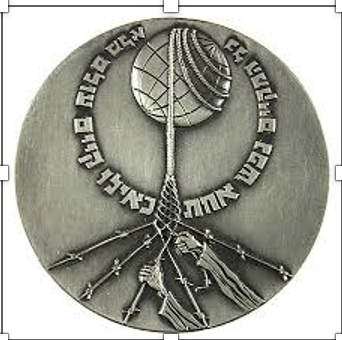
For the families and the survivors, recognising the rescuer as Righteous Among the Nations carries a tremendous emotional and historical significance. It acknowledges their actions, expresses gratitude, and it is a modest symbol of hope. The rescuers, or their living relatives, receive a medal and a certificate of honour. For years a tree was planted in their name on the Yad Vashem campus until there was no longer space; today their names are inscribed on a plaque in the Garden of the Righteous, often marked by a ceremony in Jerusalem or in their home country.
It is difficult to glean any broad generalisations from the statistics of rescuers or the communities in which they lived, particularly since the recognition process depends on documentation and so much was lost during the war. A recurring theme, however, is the humility of the rescuer. Time and again they insist – though history shows otherwise – that they were simply acting as any decent person would.
The Swiss border police commander Grüninger, for instance, said later in life that he did not regret his decision to act, despite the price he paid: ‘It was basically a question of saving human lives threatened with death. How could I then seriously consider bureaucratic schemes and calculations?’
Applications for Righteous candidates continue to arrive and the committee is still approving a few hundred annually. New stories and testimonies continue to come to light after 80-plus years.
Yad Vashem is determined as ever to investigate the stories of the Righteous. These stories endure not only as history, but as a moral example and a call to responsibility. Any new information will be examined and, if the criteria are met, brought before the committee for consideration. consideration. Guidelines and instructions for submitting applications are available on the Yad Vashem website.
Dr. Joel Zisenwine is Director of the Righteous Among the Nations Department of Yad Vashem, the World Holocaust Remembrance Centre in Jerusalem, which serves as the global epicentre of Holocaust documentation, commemoration, research and education. Through its groundbreaking exhibitions, educational initiatives, research projects and digital resources, Yad Vashem ensures that the memory of the Holocaust continues to inspire and educate future generations.
Assisi’s Museum of Memory and the Righteous Among the Nations
Anita Peleg
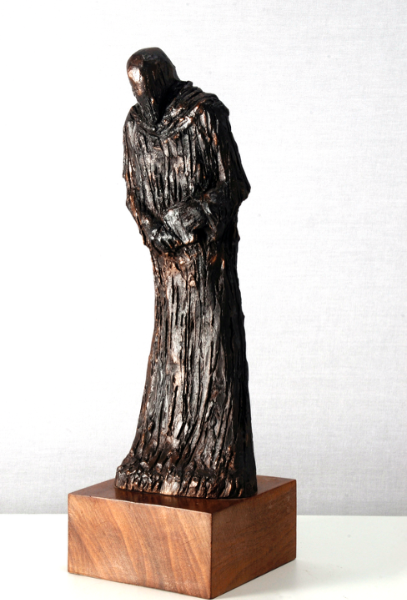
St Francis of Assisi, By Naomi Blake
In May last year, I found myself with my family in Assisi, Italy. Unexpectedly, we discovered that in the Bishop of Assisi’s Palace there was a Holocaust museum, the Assisi Museum of Memory. To be quite honest, our expectations were not very high, but upon arrival they soon changed. As we entered we saw two queues of young school students. They were visiting the same remarkable place – a small museum telling a very powerful story of how the population of this small town, led by the clergy, saved the lives of 300 Jewish refugees by hiding them from the Nazis.
Marina Rosati, curator and founder of this museum, welcomed us and gave us some background. Apart from having seen the 1970 film The Garden of the Finzi Continis and reading some memoirs, I knew relatively little about the experience of Italian Jews during the Holocaust. After Italy’s armistice with the Allies in September 1943, German forces entered Italy from the north, arresting Jews as they went. Between 1943 and 1944 more than 300 Jewish refugees, fleeing northern Italy, found refuge in Assisi. Hidden in monasteries, convents, and private homes, they were protected by a network of clergy and local citizens who risked their lives to help them. Remarkably, nearly all these refugees survived the war. This rare outcome is attributed by historians to the extraordinary organisation and collective courage of the city’s rescue network.
A Network of Rescue
This rescue network quickly formed under the leadership of the local bishop, Giuseppe Placido Nicolini, who authorised monasteries and convents across the town to hide Jewish refugees. Many religious houses had strict rules of enclosure, but during the occupation these rules were set aside to save lives. Jews were sheltered in religious communities and often disguised as monks or nuns while they waited for forged identity documents. Religious communities were central to the rescue effort, represented by figures such as Sisters Giuseppina Biviglia and Ermella Brandi, while the Franciscan friar Federico Vincenti assisted the underground network.
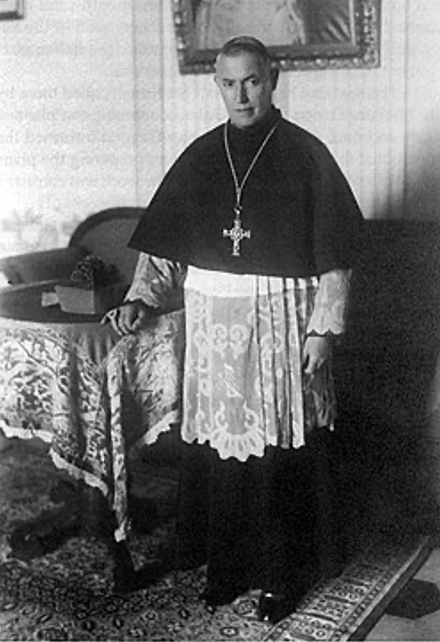
Working closely with Bishop Nicolini was the priest Aldo Brunacci, who organised food, shelter, and practical support for the refugees, and the Franciscan friar Rufino Niccacci, who helped coordinate hiding places and ensure the safety of those in danger.
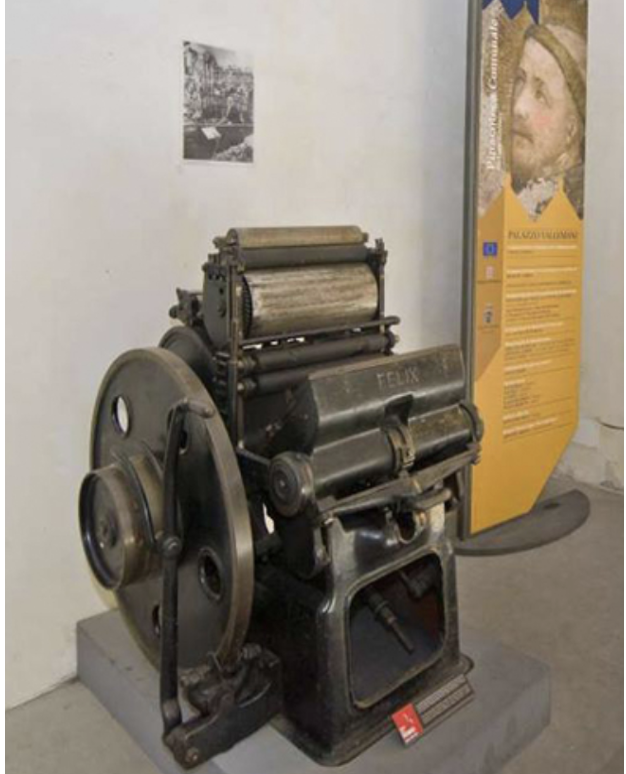
Understanding the importance of false identity papers to the survival of the refugees, local printers Luigi Brizi and Trento Brizi also played a vital role in the rescue network. They secretly produced identity cards, ration books, and other official documents needed to create these new identities, receive rations and move about in the area.
The effort was also supported by local officials, including the mayor, Arnaldo Fortini, who was expected to report these Jewish fugitives to the German authorities, but kept their presence a secret.
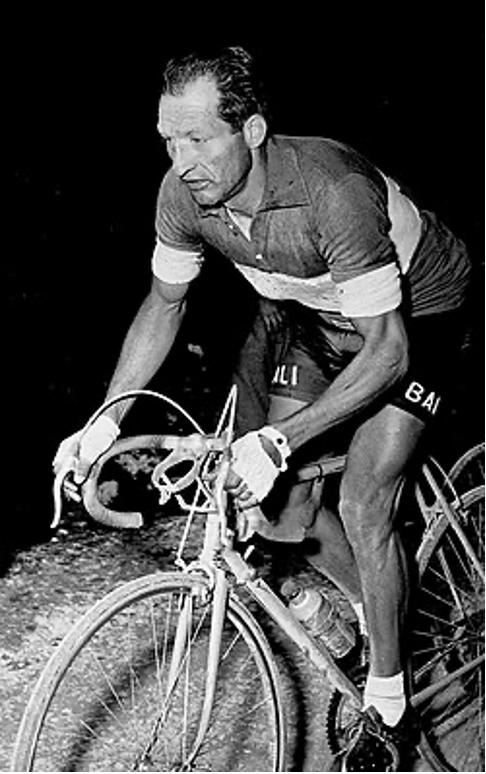
One of the best-known figures in this story is the Italian cycling champion, Gino Bartali. Already famous before the war, Bartali used his status as an athlete as a cover for clandestine activities supporting the rescue network.
Claiming he needed to maintain his training, Bartali cycled long distances across central Italy. Hidden inside the frame of his bicycle were forged identity documents produced by the underground network. These papers were delivered to Jewish families who needed new identities to survive.
Because of his celebrity status, the authorities were less likely to search him closely, allowing him to transport these lifesaving documents with less suspicion. Bartali also hid a Jewish family in his own home.
The museum displays panels dedicated to all those individuals. Photographs, documents, and testimonies demonstrate not only how this network operated but how the whole population partook in this effort to save lives. Not one person betrayed Jews in hiding, and not one of the Jews in Assisi was deported. Quite remarkably, the population united behind the leadership of the Bishop and the values of St Francis of Assisi to ensure that the Jewish refugees were safe.
The Influence of St Francis
The rescue of Jews in Assisi was deeply connected to the town’s spiritual heritage. Assisi is the birthplace of Francis of Assisi, whose teachings emphasise compassion, humility, and care for others. The reputation of Assisi was of a place of peace and compassion, and as the Nazis occupied the north, Jewish refugees were encouraged to seek sanctuary there.
For many of those involved in the rescue network, helping the persecuted was seen as a natural expression of Franciscan values. The moral legacy of St Francis had shaped the identity of the town for centuries and inspired ordinary residents to act with courage.
The school children visiting at the same time as us were clearly very engaged by these human stories. They were particularly interested in Gino Bartoli’s story and the story of father and son Luigi and Trento Brizi, crowding around the bicycle and the original printing press on display. What a wonderful way to teach young people the lessons of the Holocaust; the values of not being a bystander, of humanity and compassion and care for others.
The Nine Righteous of Assisi – A Legacy of Courage
For me, the story of Assisi is unique in Holocaust history for two reasons. First, a total of nine individuals connected with the Assisi rescue network were later recognised by Yad Vashem and the Israeli Government, as Righteous Among the Nations – non-Jews who had risked their lives to save Jews from persecution and murder.
Secondly, while many rescue efforts depended on the bravery of a few individuals, the survival of the Jews in Assisi was the result of a collective effort involving clergy, officials, craftsmen, and ordinary citizens. So while collaborators across the whole of Europe were assisting the Nazis in their goal to eradicate the Jews of Europe, in Italy there were significant pockets of resistance that helped to save lives.
Our visit to this Museum of Memory was a very moving experience. Seeing children learn about the Holocaust so encouragingly, via the stories of brave people who made active moral choices, prompts me to reflect on how we teach about the Holocaust and how we ensure that positive lessons are learned.
The story also clarified a mystery for me personally. In 2000 my mother, Naomi Blake, created a sculpture of St Francis of Assisi. I now understand what may have influenced her to create that sculpture, which now stands in a church in East Finchley. The story also echoes the messages my mother expressed through her sculpture; to promote understanding and goodwill between faiths, often using the words of the prophet Malachi 2:10:
‘Have we not one father, hath not one God created us?’
A sentiment voiced post-war by network co-ordinator, Father Brunacci:
‘In all about 300 Jews had been entrusted to us by Divine Providence with God’s help and through the intercession of St. Francis. Not one of them fell into the hands of their persecutors… Jews and Christians venerate the same book, the Bible, whose opening chapter reminds us that we were created in God’s image and likeness. God is our father and we are all brothers and sisters.’
Anita Peleg is Director and Chair of Trustees of Generation 2 Generation.
Partner Events
Association of Jewish Refugees (AJR)
12-14 June Latimer House, Chesham
A weekend to celebrate AJR’s 85th anniversary
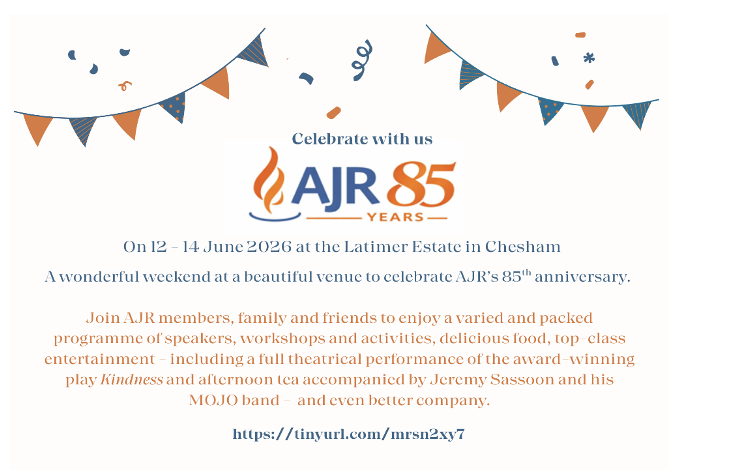
Join AJR members, family and friends to enjoy a varied and packed programme of speakers, workshops and activities, delicious food, top-class entertainment – including a full theatrical performance of the award-winning play Kindness and afternoon tea accompanied by Jeremy Sassoon and his MOJO band. email nextgens@air.org.uk
Wednesday 17 June
Imperial War Museum North
A trip to the Imperial War Museum North. Onsite parking is available.
Free. Click here to book
Facing History and Ourselves / Teach for Tomorrow
Facing History & Ourselves UK is re-launching as Teach for Tomorrow (teachfortomorrow.org). Our purpose and values remain the same – even as we become a more UK-centric organisation, we’ll continue to partner with Facing History and Ourselves in the US.
Wednesday 12 August 16:00-19:30
Glyndebourne Opera, near Lewes, East Sussex: Ariadne Auf Naxos by Richard Strauss (tickets offered by AJR marking ten years since installing the plaque to Rudolf Bing, the Austrian Jew who fled Nazi Germany and became General Manager at Glyndebourne). Tickets (Upper Circle) £145. Please email Susan Harrod on susan@ajr.org.uk
JW3
Tuesday 5 May 19:00-20:15
The Nuremberg Women: The Trials that Brought the Nazis to Justice
Historian and journalist Natalie Livingstone discusses her new book, a landmark history revealing the untold female legacy of the Nuremberg Trials. Tickets £15. Click here to book
Monday 11 May 19:00-20:30
Darren Richman: A Life in 13 Pictures
In A Life in 13 Pictures, journalist Darren Richman presents the story of his late grandfather, Holocaust survivor Zigi Shipper, through thirteen carefully chosen images. Alongside Darren, invited guests and contributors help bring these photographs to life, offering different perspectives on Zigi’s journey and the impact he had on those around him. Tickets £15. Click here to book
National Holocaust Centre and Museum
Friday 19 June 14:00-16:00
Women of Courage: Stories of Jewish Women Fleeing Nazi Persecution
For Refugee Week 2026, focusing on the theme of courage, we remember the extraordinary strength shown by women forced to flee war and persecution. Curators Claudia Reese and Diana Popescu and guest speakers from Nottingham City Council and the Nottingham women’s networks will share stories of Jewish women, and women refugees today facing dangers and making impossible choices. Ticket prices vary. Click here to book
Sunday 21 June 13:00-14:30
Flight from Prague – the Making of a Refugee
Michael Lewis, the son of a Czechoslovakian refugee and a Holocaust survivor, shares his family’s personal story through his book, Flight From Prague – The Makingof a Refugee. Ticket prices vary. Click here to book
Wiener Holocaust Library
Exhibition
20 May–30 October
Nazi Slave Labour: Perpetrators and Victims
Between 1939 and 1945, 20 million individuals were exploited as slave and forced labourers by the Nazi regime. This exhibition will explore how perpetrators profited off and exploited slave labourers, alongside the first-hand stories of the victims. Free. For more information click here
Events
Wednesday 6 May 15:00-16:30
Book Talk – Displacement: Zweig, Roth and Benjamin, by Richard Harper
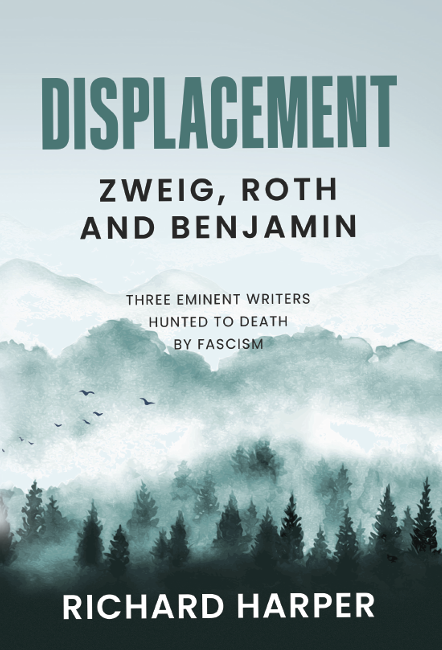
With relevance to the issues of migration and democracy today, Richard Harper will be speaking about his book, Displacement, an exploration of the meaning and feeling of those being persecuted, exiled and displaced, through the eyes of three eminent Jewish writers Zweig, Roth and Benjamin. Free. Click here to book
Thursday 14 May 18:30-20:00
Film Premiere – Forgotten Voices: The Third Reich’s Elite Schools
What happens when a school system is built to serve a dictatorship? This powerful and unsettling 30-minute documentary uncovers the hidden legacy of the National Political Education Institutes – known as Napolas – elite boarding schools founded by the Nazis to train the future leaders of the Third Reich. Free. Click here to book
Have you enjoyed our Newsletter? Please consider making a donation to our charity.
Your donations help us to keep experiences of the Holocaust alive and teach younger generations the importance of inclusivity and empathy. You can donate to support our ongoing work in the following areas:
- Speaker development and training
- Technical support for our speakers
- Creation and writing of educational materials
- Provision of Holocaust speakers for schools and other organisations
- Raising awareness of our work and our message.